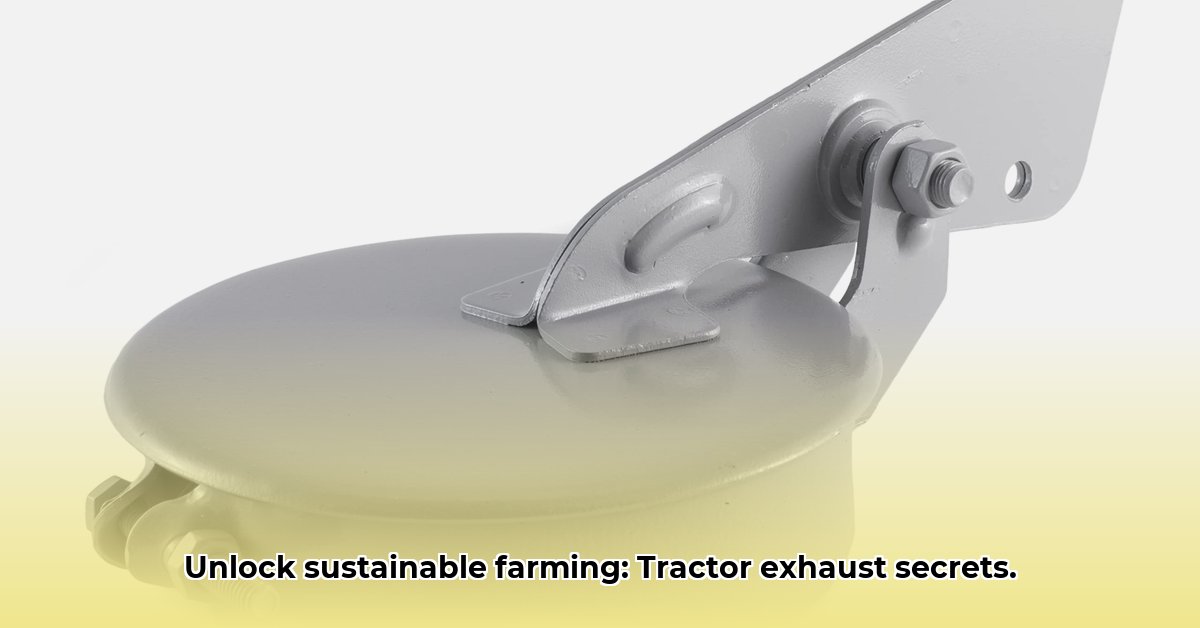
How Your Tractor's Exhaust Flapper Works
The exhaust flapper, a often-overlooked component, significantly impacts your tractor's efficiency and environmental footprint. It's essentially a valve regulating exhaust gas flow, acting like a gate controlling the release of fumes from your engine. This seemingly simple mechanism improves fuel economy and reduces emissions. For more tractor parts, check out Kubota Accessories.
When your tractor's engine is under heavy load (e.g., plowing), the flapper opens fully for unimpeded exhaust flow, ensuring optimal engine performance. Conversely, during idling or lighter use, the flapper partially closes. This restriction increases back pressure, improving fuel efficiency and drastically reducing harmful emissions. Think of it as a built-in optimization system for both performance and sustainability.
Did you know that a properly functioning exhaust flapper can contribute to a 15% reduction in fuel consumption? This translates to significant cost savings over the tractor's lifespan and reduces your environmental impact.
Troubleshooting Your Tractor's Exhaust Flapper: Identifying Common Problems
A malfunctioning exhaust flapper can manifest in several ways, significantly impacting your tractor's performance and efficiency. The most common problem is a stuck flapper, either open or closed.
Stuck Open Flapper: This usually results in reduced engine power, excessive smoke from the exhaust, and noticeably worse fuel economy. The cause? Mechanical failure, debris buildup, or corrosion within the flapper mechanism.
Stuck Closed Flapper: This scenario leads to poor idling, difficulty in heavier operations, and potential engine strain. Possible causes include mechanical failure, corrosion, or problems with the flapper's linkages.
Leaks in the exhaust system around the flapper also represent a serious problem, potentially introducing harmful exhaust fumes into the driver's cab—a significant safety hazard. Listen carefully for unusual noises; they could indicate a developing leak or other problems.
Here's a concise summary of common problems, symptoms, and potential causes:
| Problem | Symptoms | Likely Causes |
|---|---|---|
| Flapper Stuck Open | Reduced power, excessive smoke, poor fuel economy | Mechanical failure, debris, corrosion |
| Flapper Stuck Closed | Poor idling, engine struggles under load | Mechanical failure, corrosion, linkage issues |
| Exhaust System Leaks | Exhaust fumes in cab, power loss, unusual noises | Loose clamps, cracked pipes, damaged flapper seal |
Maintaining Your Exhaust Flapper: A Step-by-Step Guide to Preventative Care
Regular maintenance is crucial for optimal performance and longevity of your exhaust flapper. A few minutes of preventative care can prevent costly repairs down the line.
1. Visual Inspection: Regularly check the flapper for signs of damage, wear, or soot buildup. Early detection is key to preventing major problems. Aim for a weekly inspection during peak usage periods.
2. Cleaning: Accumulated debris hinders the flapper's smooth operation. Use compressed air to gently remove any buildup. Remember, a clean flapper ensures efficient performance.
3. Lubrication: Apply a suitable lubricant to the flapper's hinge points to ensure smooth movement and extend lifespan. This simple step can significantly improve the longevity of your flapper.
4. Replacement: If the flapper is beyond repair, replace it promptly. These parts are generally readily available from agricultural supply stores.
Replacing Your Tractor's Exhaust Flapper: A Detailed Procedure
Replacing a flapper requires careful attention to safety. Always prioritize safety:
1. Safety First!: Disconnect your tractor's battery and allow the engine to cool completely before starting. Wear protective gloves and eyewear. Exhaust systems retain intense heat.
2. Locate the Flapper: Consult your tractor's manual to locate the flapper within the exhaust system (usually near the exhaust manifold).
3. Careful Disconnection: Gently disconnect linkages or components connected to the flapper. Avoid force; take your time to prevent damage.
4. Removing the Old Flapper: Carefully remove the old, damaged flapper.
5. Installing the New Flapper: Install the new flapper, ensuring proper alignment and secure connections.
6. Reconnecting Components: Reattach all previously disconnected linkages and components.
7. Testing the Flapper: Start your tractor and verify that the flapper opens and closes smoothly. Listen for any unusual noises.
This detailed process should ensure a successful replacement, boosting your tractor's efficiency and minimizing environmental impact.
The Importance of Exhaust Flapper Maintenance for Sustainable Farming
Maintaining your tractor's exhaust flapper is not merely about mechanical upkeep; it’s a vital component of sustainable farming practices. A well-maintained flapper contributes directly to:
- Improved fuel economy, saving you money on fuel costs.
- Reduced harmful emissions, minimizing your environmental footprint.
- Enhanced engine performance, ensuring your tractor runs efficiently and reliably.
By adhering to these straightforward guidelines, you can ensure your tractor operates at peak efficiency while contributing to a more sustainable agricultural future. Remember, a small part like the exhaust flapper can make a significant difference in the long run.